Search results for: 'tree teeth four site'
- Related search terms
- site out enabl cohesive devices
- site out enabl cohesive derives
- tree texanu good
- site 2 bedroom good rd epsom
- tree texanu good//
- Parodotus Benedeni$0.00
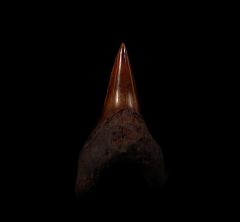
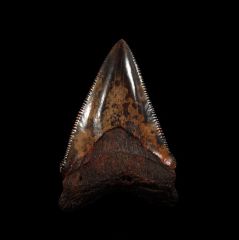
An Ultra Rare, LARGE copper-red Parotodus benedeni tooth from the Meherrin River, No. Carolina. Rare deep copper red color with exceptional gloss. Highest quality enamel. Great preservation and condition - extra sharp edges and needle-like tip - very clean & very rare. The root shows very nice detail and is complete and extra large with a little surface pitting. This tooth appears to be a Yorktown Fm., Pliocene age tooth. No repair or restoration. Exceptional color! An exceptional, rare collector's tooth! Authenticity guaranteed. The red site Parotodus teeth are ultra rare, and a lower anterior adds to its rarity! A collector must have tooth.
NC522 SIZE: 2-1/8"
Learn More - Bigeye Sand Tiger Shark - Modern$0.00
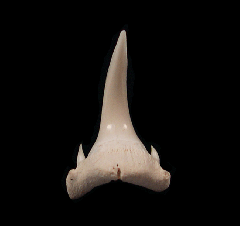
A rare GEM modern Bigeye Sand Tiger shark, Carcharias noronhai. Upper jaw tooth with four long side cusps. This is deeper water Sand Tiger shark that is rarely seen. Bright white color. Perfect tooth. Authenticity guaranteed. (1 Bigeye Sand Tiger tooth available)
MON01 SIZE: 1"
Note - Adding 15 new modern shark species in January 2024 -> Link to modern shark teeth
Learn More - Hexanchus microdon$50.00
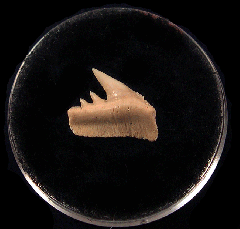
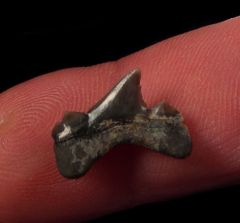
A rare, Top Quality Hexanchus microdon tooth from the Khouribga phosphate mining area of Morocco. This is a rare complete upper jaw tooth with four primary cusps. Great preservation and color. The root is excellent - very unique & difficult to find! Perfect tooth. Authenticity guaranteed. This rare piece is from an old collection!
M665 Size: 7/16"
Note - Adding 14 new Moroccan Hexanchus teeth in October 2023 -> Link to Hexanchus Teeth
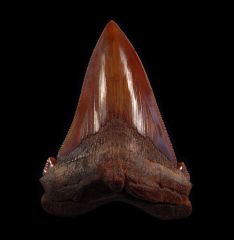
Learn More - Otodus auriculatus (Megalodon ancestor)$0.00The September 2015 "Fossil Shark Tooth of the Month" is an ultra rare, EXTRA LARGE, GEM Carcharocles auriculatus from the copper-red site in North Carolina. This a biggest top quality Anterior Auriculatus tooth tooth that I have seen from the copper-red site. The finest RED colored crown. The enamel is the highest possible quality. Extremely rare size. The serrations and tip are incredible - one serration damaged! A gorgeous North Carolina copper-red Auriculatus shark tooth, and an exceptional collector's tooth. Note - you rarely see a copper-red Auriculatus shark tooth that has a top quality crown, root and serrations - a top 1% tooth from this site! Museum quality. NO repair! The BEST of the BEST! NC102 SIZE: 3-3/4" Learn More
- Carcharhinus limbatus : Mexico$15.00
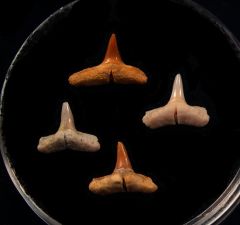
A set of four Top Quality Carcharhinus limbatus, Blacktip shark, tooth from Baja, Mexico. Highest quality enamel. Excellent tan color with a tan root. Very good preservation and condition. This is a Miocene age tooth from the Rosarita Beach Fm. Authenticity guaranteed. A fantastic collector's tooth from a rare locality.
MX387 Size: ~1/4"
Posting 19 species (68 rare shark teeth) from Baja, Mexico. Link to Mexican shark teeth -> Mexico shark teeth
Learn More - Symmorium sp.$135.00
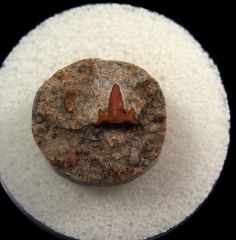
A rare, Top Quality Symmorium sp., an extinct Cladodont shark tooth, from the Paleozoic era in Indiana. A primary cusp with four side cusps. Great color. Complete crown and root. A well preserved specimen. No repair or restoration. Authenticity guaranteed. An excellent collector's tooth!
Age: Upper Mississippian (330 MYA); Haney Fm.
Location: Crawford Co., Indiana
Z040 SIZE: 5/16"
Adding 55 US Paleozoic teeth in May 2022 --> Link to US Paleozoic teeth
Learn More - Notorynchus kempi$95.00
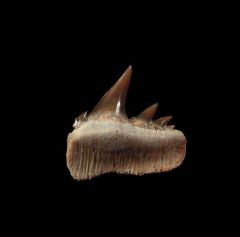
An ultra rare Top Quality, upper jaw Notorynchus kempi, Seven-gill Cow shark, tooth from Kent, Kazakhstan. This tooth has four primary cusps. An Eocene (Bartonian) Cow shark species. Kazakh N. kempi teeth are quite rare and excellent examples are hard to locate. No repair or restoration. Authenticity guaranteed. A near Perfect tooth. One of the finest localities for Eocene age shark teeth!
K434 SIZE: 3/4"
Note - Adding 30 Kazakh Notorhynchus teeth in April 2022. Kazakhstan Notorhynchus Catalog
Learn More - Otodus mugodzharicus (Partial serrated)$0.00
A very rare, early Otodus mugodzharicus upper jaw, posterior tooth from Aktulagay, western Kazakhstan. A transitional tooth leading to C. auriculatus (see detailed discussion below) which leads to Megalodon. The bourlette is complete. Tooth exhibits very fine serrations along the inner curve of the crown only. These teeth exhibit very good color, gloss, and preservation. A rare, early Eocene Auriculatus transition tooth. A very challenging tooth to find when building a Megalodon evolutionary set! No repair. Authenticity guaranteed. Note - This western Kazakhstan site is one of the few places in the world where the Otodus to Auriculatus transition can be found in adjacent layers.
K555 SIZE: 5/8"
Note - Adding 18 Kazakh Auriculatus or transition teeth in April 2020. --> Link to Kazakh Auriculatus teeth.
Learn More - Otodus chubutensis$0.00
A GORGEOUS, "Bumble Bee" Chubutensis tooth - an upper jaw anterior tooth from the Meherrin River red site in northeastern No. Carolina. The "Bumble Bee" tooth with incredible rare yellow and black colors! A January 2020 Fossil of the Month. Highest quality enamel. No enamel peel. The bourlette is composed of the lower dentin layer. The serrations are sharp and 100% complete with an excellent tip serration. Excellent side cusps. The root is gorgeous with few cracks on the face. No repair! An ultra rare Chubutensis collector's tooth with fantastic color. Definitely a top 1% red site Chub considering preservation and color! Museum Quality. Authenticity guaranteed.
NC062 BoP2 SIZE: 2-5/16"
Learn More - Otodus obliquus (not serrated)$95.00
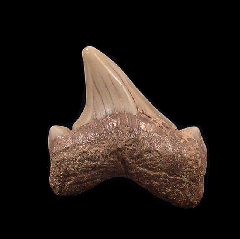
A very rare, early Otodus obliquus anterior tooth from Kzil-Orda Region, Kazakhstan. Otodus obliquus is the ancestor to O. auriculatus (see detailed discussion below) which leads to Megalodon. The bourlette is large and complete. Exhibits no serrations. The starting species to serrated Otodus teeth. These teeth exhibit very good color, gloss, and preservation. A rare, early Eocene (Ypresian) Auriculatus transition tooth. A very challenging tooth to find when building a Megalodon evolutionary set! No repair. Authenticity guaranteed. Note - This western Kazakhstan site is one of the few places in the world where the Otodus obliquus to Otodus auriculatus transition can be found in adjacent early Eocene formation units.
K561 SIZE: 1-1/16"
Note - Adding 24 Kazakh Auriculatus or transition teeth in July 2024. --> Link to Kazakh Auriculatus teeth.
Learn More - Otodus obliquus (not serrated)$135.00
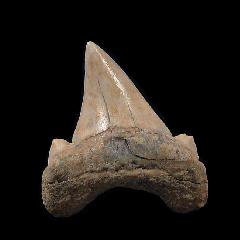
A very rare, early Otodus obliquus anterior tooth from Kzil-Orda Region, Kazakhstan. Otodus obliquus is the ancestor to O. auriculatus (see detailed discussion below) which leads to Megalodon. The bourlette is large and complete. Exhibits no serrations. The starting species to serrated Otodus teeth. These teeth exhibit very good color, gloss, and preservation. A rare, early Eocene (Ypresian) Auriculatus transition tooth. A very challenging tooth to find when building a Megalodon evolutionary set! No repair. Authenticity guaranteed. Note - This western Kazakhstan site is one of the few places in the world where the Otodus obliquus to Otodus auriculatus transition can be found in adjacent early Eocene formation units.
K562 SIZE: 1-1/4"
Note - Adding 24 Kazakh Auriculatus or transition teeth in July 2024. --> Link to Kazakh Auriculatus teeth.
Learn More - Otodus obliquus (not serrated)$200.00
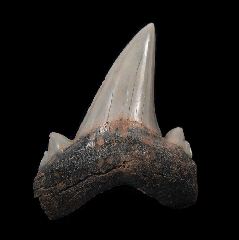
A very rare, early Otodus obliquus anterior tooth from Kzil-Orda Region, Kazakhstan. Otodus obliquus is the ancestor to O. auriculatus (see detailed discussion below) which leads to Megalodon. The bourlette is large and complete. Exhibits no serrations. The starting species to serrated Otodus teeth. These teeth exhibit very good color, gloss, and preservation. A rare, early Eocene (Ypresian) Auriculatus transition tooth. A very challenging tooth to find when building a Megalodon evolutionary set! No repair. Authenticity guaranteed. Note - This western Kazakhstan site is one of the few places in the world where the Otodus obliquus to Otodus auriculatus transition can be found in adjacent early Eocene formation units.
K561 SIZE: 1-1/4"
Note - Adding 24 Kazakh Auriculatus or transition teeth in July 2024. --> Link to Kazakh Auriculatus teeth.
Learn More