Search results for: 'paleo fossil tooth four sa02'
- Related search terms
- fossil finder id good
- fossil fisher id good
- fossil fish id good
- fossil fisher id good/
- fossil fish id good/
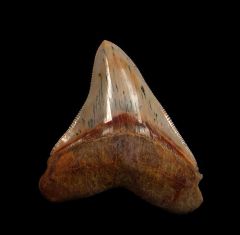
- Carcharocles megalodon$0.00
An Ultra Rare, GEM Quality Sharktooth Hill Megalodon tooth found in the Round Mountain silt near Bakersfield, California. A location that produces very few Megalodon teeth and one of the toughest Meg teeth to locate. A March 2021 Fossil of the Month. This colorful tooth was found in a "fire zone" site south of the Kern River. Highest quality enamel with a great tan and golden tan colors with charcoal highlights. The bourlette is a red color and 100% complete. The serrations are extra large and 100% complete with a great tip. The root is nicely articulated and complete. Also note the grooves on the root ends - a Miocene trait. This is a middle Miocene Meg - very unique! 100% natural. No repair or restoration. You will not see these middle Miocene Sharktooth Hill Megs from Bakersfield, California very often. One of the rarest Megs! Authenticity guaranteed. Museum Quality. An incredible color Meg collector piece! The BEST.
ST452 BoP Size: 3-7/8"
Note - Adding three Sharktooth Hill Meg teeth in March 2021. Link to Sharktooth Hill Meg Teeth.
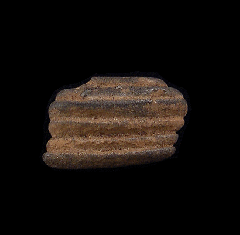
Learn More - Capybara$25.00
A well preservedextinct Giant Capybara molar from Edisto River, So. Carolina. The Giant Capybara was an oversized rodent that evolved in the Pleistocene and became extinct at the end of the Pleistocene in North America. This is a molar tooth with good cusp detail with little wear. Well fossilized. No repair or restoration. Authenticity guaranteed.
X822 Size: 3/4" x 1/2"
Name: Capybara sp.
Age: Pleistocene
Location: Edisto River, So. Carolina
Note - Posting 26 mammal and reptile fossils in March 2024. Link to Other Mammals
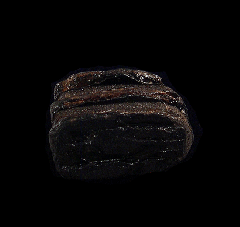
Learn More - Capybara$32.50
A well preserved extince Giant Capybara molar from Edisto River, So. Carolina. The Giant Capybara was an oversized rodent that evolved in the Pleistocene and became extinct at the end of the Pleistocene in North America. This is a molar tooth with good cusp detail with little wear. Well fossilized. No repair or restoration. Authenticity guaranteed.
X821 Size: 7/8" x 7/16"
Name: Capybara sp.
Age: Pleistocene
Location: Edisto River, So. Carolina
Note - Posting 26 mammal and reptile fossils in March 2024. Link to Other Mammals
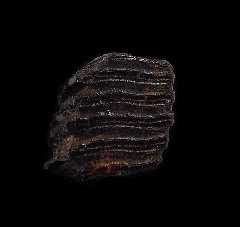
Learn More - Capybara$47.50
A well preserved extinct Giant Capybara molar from Edisto River, So. Carolina. The Giant Capybara was an oversized rodent that evolved in the Pleistocene and became extinct at the end of the Pleistocene in North America. This is a molar tooth with good cusp detail with little wear. Well fossilized. No repair or restoration. Authenticity guaranteed.
X819 Size: 5/8" x 11/16"
Name: Capybara sp.
Age: Pleistocene
Location: Edisto River, So. Carolina
Note - Posting 26 mammal and reptile fossils in March 2024. Link to Other Mammals
Learn More - Physogaleus secundus$25.00
A Top Quality Physogaleus secundus, the Ground shark, tooth from the phosphate mines of Hahotoe, Togo. An anterior tooth. Excellent color and preservation. This tooth is Lutetian age (45 MYA), lower middle Eocene. No repair or restoration. Authenticity guaranteed.
TG090 SIZE: 1/2"
Learn More
Note - Adding 117 shark teeth from Togo in March 2022. Link to Togo Shark Teeth - Physogaleus secundus$30.00
A Top Quality Physogaleus secundus, the Ground shark, tooth from the phosphate mines of Hahotoe, Togo. Excellent color and preservation. This tooth is Lutetian age (45 MYA), lower middle Eocene. No repair or restoration. Authenticity guaranteed. Perfect tooth.
TG086 SIZE: 1/2"
Learn More
Note - Adding 117 shark teeth from Togo in March 2022. Link to Togo Shark Teeth - Physogaleus secundus$25.00
A Top Quality Physogaleus secundus, the Ground shark, tooth from the phosphate mines of Hahotoe, Togo. Excellent color and preservation. This tooth is Lutetian age (45 MYA), lower middle Eocene. No repair or restoration. Authenticity guaranteed. Near Perfect tooth.
TG083 SIZE: 9/16"
Learn More
Note - Adding 117 shark teeth from Togo in March 2022. Link to Togo Shark Teeth - Physogaleus secundus$30.00
A Top Quality Physogaleus secundus, the Ground shark, tooth from the phosphate mines of Hahotoe, Togo. Excellent color and preservation. This tooth is Lutetian age (45 MYA), lower middle Eocene. No repair or restoration. Authenticity guaranteed. Near Perfect tooth.
TG082 SIZE: 9/16"
Learn More
Note - Adding 117 shark teeth from Togo in March 2022. Link to Togo Shark Teeth - Equus sp. Astragalus bone$15.00
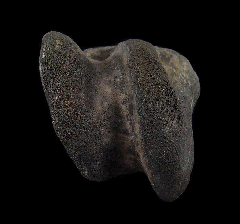
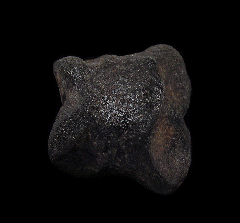
A LARGE horse astragalus bone (Equus sp. ) from Northern Florida. The astragalus is the ankle bobe. The horse arrived in North America during the late Pliocene and became extinct at the end of the Pleistocene. A well fossilized specimen. No repair or restoration. Authenticity guaranteed.
XH33 Size: 2-1/2"
Name: Equus sp.
Age: Pleistocene
Location: Northern Florida
Note - Posting 23 horse fossils in December 2024. Link to Horse Fossils
Learn More - Equus sp. Toe bone$17.50
A well preserved horse toe bone (Equus sp. ) from Northern Florida. This is the second bone (phalanx). The horse arrived in North America during the late Pliocene and became extinct at the end of the Pleistocene. A well fossilized specimen. No repair or restoration. Authenticity guaranteed.
XH26 Size: 1-3/4"
Name: Equus sp.
Age: Pleistocene
Location: Northern Florida
Note - Posting 23 horse fossils in December 2024. Link to Horse Fossils
Learn More - Equus sp. Toe bone$17.50
A well preserved horse toe bone (Equus sp. ) from Northern Florida. This is the second bone (phalanx). The horse arrived in North America during the late Pliocene and became extinct at the end of the Pleistocene. A well fossilized specimen. No repair or restoration. Authenticity guaranteed.
XH25 Size: 1-3/4"
Name: Equus sp.
Age: Pleistocene
Location: Northern Florida
Note - Posting 23 horse fossils in December 2024. Link to Horse Fossils
Learn More - Equus sp. Hoof Core$125.00
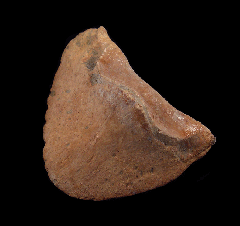
A well preserved horse hoof core bone (Equus sp. ) from Northern Florida. The horse arrived in North America during the late Pliocene and became extinct at the end of the Pleistocene. A well fossilized specimen. No repair or restoration. Authenticity guaranteed.
XH21 Size: 2-1/8" x 3" wide
Name: Equus sp.
Age: Pleistocene
Location: Northern Florida
Note - Posting 23 horse fossils in December 2024. Link to Horse Fossils
Learn More