Search results for: 'like planus few planus first good'
- Related search terms
- goods terrestri a none
- good terrestri a none
- good terrestri a none/
- good terrestri a none//
- goods terrestri a none//
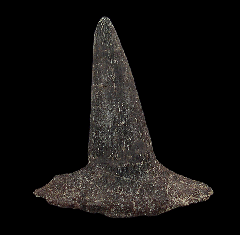
- Spicomellus afer - Ankylosaur Spike$1,695.00
An Ultra Rare, TOP QUALITY Spicomellus afer spike osteoderm from the earliest known Ankylosaur found in the Boulemane region of Morocco. An October Fossil of the Month. An excellent spike with an incredible natural black color and patina. The surface quality is exceptional with no pitting, nicks or wear! Fully inflated. Simple crack fill. No restoration. An exceptional quality, collector's spke. Authenticity guaranteed. Spicomellus afer specimens are quite rare and only a few have been found. This is what a real Spicomellus afer spike looks like. Jurassic age (Bathonian) - 166 MYA. Found in the El Mers Group (formation), Boulahfa, So. of Boulemane, Fes Meknas, Morocco.
M1301c Size: 3-5/16" ; 1-1/8" width ; Base width: 3-1/8"
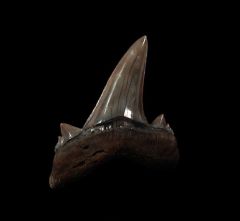
Learn More - Otodus mugodzharicus (Partial serrated)$0.00
A very rare, early Otodus mugodzharicus upper jaw, lateral tooth from Aktulagay, western Kazakhstan. A transitional tooth leading to C. auriculatus (see detailed discussion below) which leads to Megalodon. A November Fossil of the Month.The bourlette is complete. Tooth exhibits "wavy serrated" edges similar to the Isurus escheri tooth. These teeth exhibit very good color, gloss, and preservation. A rare, early Eocene Auriculatus transition tooth. A very challenging tooth to find when building a Megalodon evolutionary set! No repair. Authenticity guaranteed. This western Kazakhstan site is one of the few places in the world where the Otodus to Auriculatus transition can be found in adjacent layers. Note - This is my last offering of Aktluagay teeth.
K552 SIZE: 1-9/16"
Note - Adding 19 Kazakh Auriuclatus or transition teeth in November 2021. --> Link to Kazakh Auriculatus teeth.
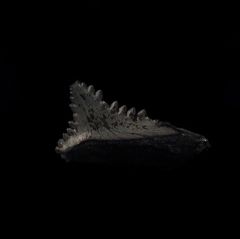
Learn More - Edestus minor$75.00
A very rare Edestus heinrichi shark tooth, from Herrin, Illinois. This is a Paleozoic shark that lived in swamps that our now underground coal deposits. Very good preservation with excellent serrations. The Edestus shark would have an upper and lower tooth whorl that are vertically opposed. Research showed that they could use their opposing teeth in a scissor-like motion to cut prey. It is the first animal to cut vertically. A very strange looking and unique acting shark. Shark recreation image is credited to Julio Lacerdo. These rare teeth are Pennsylvanian age from Illinois. No repair or restoration. Authenticity guaranteed.
I014 SIZE: 7/8"
Adding 15 Edestus shark specimens in April 2021. Link to Edestus shark.
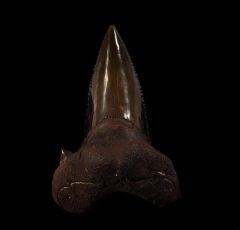
Learn More - Otodus auriculatus (Early Eocene form)$0.00
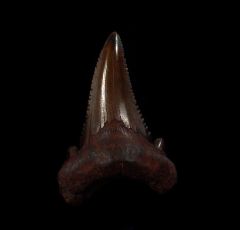
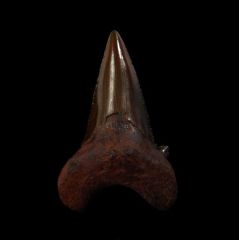
A very rare, Otodus auriculatus tooth from the copper-red site of No. Carolina. The crown has coarse serrations. The side cusps are typical of the Otodus obliquus. Complete root. Early Eocene - Ypresian age. A very rare collector's tooth. Very few Otodus auriculatus teeth (early form) found at this site!
NC253 SIZE: 2-1/2"Note - Adding 9 early NC red site early Rics, transition teeth, and later Rics in June 2020. Link to NC Auriculatus teeth
Learn More - Otodus auriculatus (Early Eocene form)$0.00
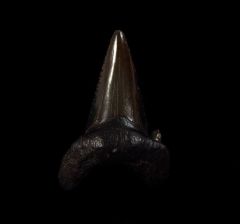
A very rare, Otodus auriculatus tooth from the copper-red site of No. Carolina. The crown has coarse serrations. The side cusps are typical of the Otodus obliquus. Complete root. Early Eocene - Ypresian age. A very rare collector's tooth. Very few Otodus auriculatus teeth (early form) found at this site!
NC254 SIZE: 2-1/16"Note - Adding 9 early NC red site early Rics, transition teeth, and later Rics in June 2020. Link to NC Auriculatus teeth
Learn More - Otodus auriculatus (Early Eocene form)$0.00
A very rare, Otodus auriculatus tooth from the copper-red site of No. Carolina. The crown has coarse serrations. The side cusps are typical of the Otodus obliquus. Complete root. Early Eocene - Ypresian age. A very rare collector's tooth. Very few Otodus auriculatus teeth (early form) found at this site!
NC255 SIZE: 1-11/16"Note - Adding 9 early NC red site early Rics, transition teeth, and later Rics in June 2020. Link to NC Auriculatus teeth
Learn More - Carcharocles megalodon$0.00
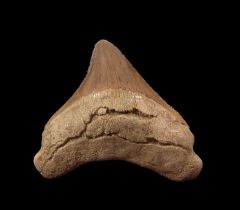
An Ultra Rare, High Quality Sharktooth Hill Megalodon tooth found in the Round Mountain Silt near Bakersfield, California. A location that produces very few Megalodon teeth and one of the toughest Megs to locate. Good quality enamel with a great light tan color. The bourlette is a near white color and complete. The serrations are sharp and near complete with a rounded tip. The root is nicely articulated and complete. Also note the large groove on the root ends - a Miocene trait. This is a middle Miocene Meg - very unique! 100% natural. No repair or restoration. You will not see these middle Miocene Sharktooth Hill Megs from Bakersfield, California very often. One of the rarest Megs! Authenticity guaranteed. A great collector piece that came out of a 25 year old old collection!
ST454 Size: 2-3/8"
Note - Adding four Sharktooth Hill Meg teeth in November 2020. Link to Sharktooth Hill Meg Teeth.
Learn More - Carcharocles auriculatus$45.00
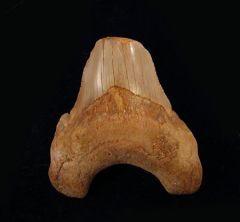
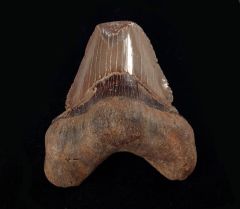
A LARGE Auriculatus tooth. Anterior tooth. Enamel quality is good with an extra large bourlette. Serrations are sharp. The tip area was broke during feeding and is worn smooth. This shark was eating some tough whales as well. A massive root. Typical commercial grade tooth.
M063 SIZE: 2-5/8"
Learn More - Carcharocles auriculatus$0.00
A MASSIVE Auriculatus tooth. Anterior tooth. Enamel quality is quite good with an extra large bourlette. Serrations are very sharp. The tip area was broke during feeding and is worn smooth. This shark was eating some tough whales. The root is massive (>1-1/4" thick). Typical commercial grade tooth.
M060 SIZE: 3"
Learn More - Otodus aksuaticus (Early Eocene form)$0.00
A very rare, Otodus aksuaticus tooth from the copper-red site of No. Carolina. The crown has coarse serrations over the lower 2/3 of crown that disappear in the top 1/3 of crown. The side cusps are typical of the Otodus obliquus. Complete root. Early Eocene - Ypresian age. A very rare collector's tooth. Very few Otodus aksuaticus teeth found at this site!
NC252 SIZE: 2-3/8"Note - Adding 9 early NC red site early Rics, transition teeth, and later Rics in June 2020. Link to NC Auriculatus teeth
Learn More - Otodus chubutensis$0.00
A TOP QUALITY, 3" Classic Lee Creek Chubutensis tooth (predecessor of Megalodon) - ANTERIOR tooth. This Chubutensis has an incredible light tan colored crown with a light brown bourlette. Highest quality enamel with a few hydration cracks. Excellent color! The bourlette is excellent. The serrations are razor sharp - near perfect with needle-like tip serration. Excellent serrations - razor sharp! The root is an excellent light tan color and absolutely complete. This Chubutensis was found in the Pungo River Formation, Lee Creek mine, NC (Miocene age = 14.5 MYA). An excellent example of a classic Lee Creek Megs considering the shape, color, and preservation. An exceptional collector's tooth from the old days at Lee Creek mine! NO repair or restoration. Authenticity guaranteed.
LC077 Size: 3"
Learn More - Shark Vertebrae$0.00
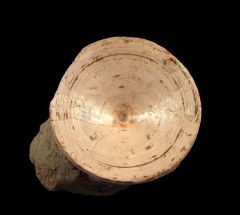
An EXTRA LARGE, GEM Quality, shark vertabra from the Sharktooth Hill area, near Bakersfield, California. A February Fossil of the Month.Note - Most likely a large Mako shark vertebra and part of an associated pair with ST954. The sides are all clean and fully articulated. The base is the original Round Mountain silt matrix. Excellent preservation and gorgeous color. No repair or restoration. Authenticity guaranteed. A scarce find for Sharktooth Hill, and 2"+ are always very difficult to find. The best Sharktooth Hill vertebra the I have seen. A fantastic display piece!
ST955 SIZE: 2-5/8" (1-1/4" Height)
Note - Adding 2 XL associated STH shark vertebrae in February 2022. Link to STH shark vertebta.
Note - Adding 12 Sharktooth Hill display pieces in Feb. 2022. Link to STH Display Items
Learn More