Search results for: 'like paper few planus fish guid'
- Related search terms
- planus to good de
- like palm first planus fish good
- guid goods mako
- guid good manu
- guid good mako
- Otodus obliquus (not serrated)$200.00
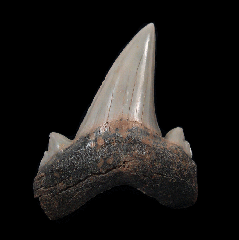
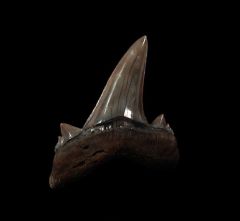
A very rare, early Otodus obliquus anterior tooth from Kzil-Orda Region, Kazakhstan. Otodus obliquus is the ancestor to O. auriculatus (see detailed discussion below) which leads to Megalodon. The bourlette is large and complete. Exhibits no serrations. The starting species to serrated Otodus teeth. These teeth exhibit very good color, gloss, and preservation. A rare, early Eocene (Ypresian) Auriculatus transition tooth. A very challenging tooth to find when building a Megalodon evolutionary set! No repair. Authenticity guaranteed. Note - This western Kazakhstan site is one of the few places in the world where the Otodus obliquus to Otodus auriculatus transition can be found in adjacent early Eocene formation units.
K561 SIZE: 1-1/4"
Note - Adding 24 Kazakh Auriculatus or transition teeth in July 2024. --> Link to Kazakh Auriculatus teeth.
Learn More - Otodus aksuaticus (Partial serrated)$325.00
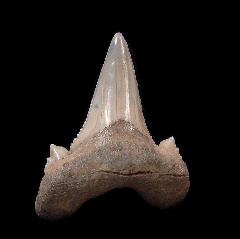
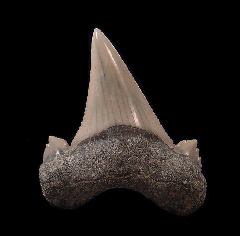
A very rare, early Otodus aksuaticus anterior tooth from Kzil-Orda, Kazakhstan. A transitional tooth leading to O. auriculatus (see detailed discussion below) which leads to Megalodon. The bourlette is complete. This tooth exhibits small serrations along the lower 1/2 of the crown and micro serrations to the tip. These teeth exhibit excellent color, gloss, and preservation. A rare, early (Ypresian) Eocene Auriculatus transition tooth. A very challenging tooth to find when building a Megalodon evolutionary set! No repair or restoration. Authenticity guaranteed. This western Kazakhstan site is one of the few places in the world where the Otodus obliquus to Otodus auriculatus transition can be found in adjacent geologic layers.
K546 SIZE: 1-9/16"
Note - Adding 24 Kazakh Auriuclatus or transition teeth in July 2024. --> Link to Kazakh Auriculatus teeth.
Learn More - Otodus aksuaticus (Partial serrated)$350.00
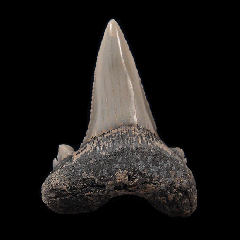
A very rare, early Otodus aksuaticus anterior tooth from Kzil-Orda, Kazakhstan. A transitional tooth leading to O. auriculatus (see detailed discussion below) which leads to Megalodon. The bourlette is complete. This tooth exhibits small serrations along the lower 1/2 of the crown and micro serrations to the tip. These teeth exhibit excellent color, gloss, and preservation. A rare, early (Ypresian) Eocene Auriculatus transition tooth. A very challenging tooth to find when building a Megalodon evolutionary set! No repair or restoration. Authenticity guaranteed. This western Kazakhstan site is one of the few places in the world where the Otodus obliquus to Otodus auriculatus transition can be found in adjacent geologic layers.
K545 SIZE: 1-3/4"
Note - Adding 24 Kazakh Auriuclatus or transition teeth in July 2024. --> Link to Kazakh Auriculatus teeth.
Learn More - Otodus aksuaticus (Partial serrated)$425.00
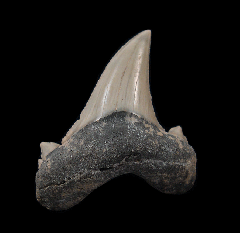
A very rare, early Otodus aksuaticus lateral tooth from Kzil-Orda, Kazakhstan. A transitional tooth leading to O. auriculatus (see detailed discussion below) which leads to Megalodon. The bourlette is complete. This tooth exhibits small serrations along the lower 1/3 of the crown and micro serrations to the tip. These teeth exhibit excellent color, gloss, and preservation. A rare, early (Ypresian) Eocene Auriculatus transition tooth. A very challenging tooth to find when building a Megalodon evolutionary set! No repair or restoration. Authenticity guaranteed. This western Kazakhstan site is one of the few places in the world where the Otodus obliquus to Otodus auriculatus transition can be found in adjacent geologic layers.
K543 SIZE: 1-7/8"
Note - Adding 24 Kazakh Auriuclatus or transition teeth in July 2024. --> Link to Kazakh Auriculatus teeth.
Learn More - Glyphis (Speartooth shark)$65.00
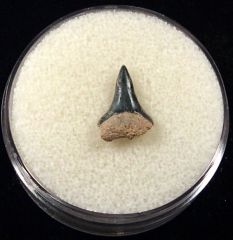
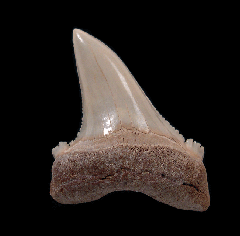
A very rare Glyphis glyphis tooth, the Speartooth shark, from Sumatra, Indonesia. These teeth were deposited in the Telisa formation - a shallow marine environment during the middle Miocene (approx. 15 million years ago.) A very unique collector's tooth. D177 is an excellent upper jaw anterior tooth. Note - "spear-like" crown development. My best upper jaw tooth! Authenticity guaranteed.
D177 SIZE: 1/2"
Note - 16 new Sumatran Glyphis glyphis teeth added in January 2018. Link to Sumatran teeth.
Learn More - Priscacara liops$0.00
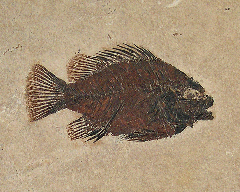
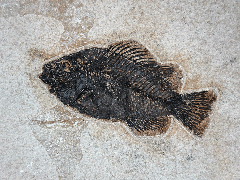
A Top Quality Priscacara (Cockerellites) liops fish from the 18" layer, Green River Fm., Lincoln Co. Wyoming. The Priscacara liops is an extinct Perch from the Eocene age (50 MYA). This piece is from the 18 Inch Layer which is extremely hard and difficult to prepare. It also provides the most detailed, highly preserved fossils. Exceptional preservation and preparation. No repair. All natural. Authenticity guaranteed. Museum Quality. An excellent display piece! Note - This item weighs 5.2 lbs. An international shipping surcharge will be applied to "Free Shipping". Please inquire for cost.
X489 SIZE: 5-1/4" Plate size is 12" x 9.5"
Note - Adding 4 Green River Fm. Fossil fish in December 2023 --> Link to Fossil Fish
Learn More - Priscacara liops$275.00
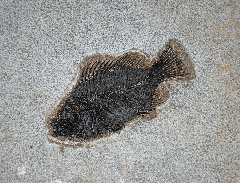
A Top Quality Priscacara (Cockerellites) liops fish from the 18" layer, Green River Fm., Lincoln Co. Wyoming. The Priscacara liops is an extinct Perch from the Eocene age (50 MYA) in the ancient Lake Gosiute deposit. This piece is from the 18 Inch Layer which is extremely hard and difficult to prepare. It also provides the most detailed, highly preserved fossils. Exceptional preservation and preparation. No repair. All natural. Authenticity guaranteed. Museum Quality. An excellent display piece! Note - This item weighs 5.5 lbs. and will have shipping supplement for international free shipping orders.
X487 SIZE: 5" Plate size: 9.75" x 8"
Note - Adding 17 Green River Fm. Fossil fish in November 2025 --> Link to Fossil Fish
Learn More - Priscacara liops$325.00
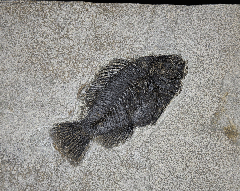
A Large, Top Quality Priscacara (Cockerellites) liops fish from the 18" layer, Green River Fm., Lincoln Co. Wyoming. The Priscacara liops is an extinct Perch from the Eocene age (50 MYA). This piece is from the 18 Inch Layer which is extremely hard and difficult to prepare. It also provides the most detailed, highly preserved fossils. Exceptional preservation and preparation. No repair. All natural. Authenticity guaranteed. Museum Quality. An excellent display piece! Note - This item weighs 2.5 lbs. An international shipping surcharge will be applied to "Free Shipping". Please inquire for cost.
X486 SIZE: 5-1/2" Plate size is 10" x 8.5".
Note - Adding 17 Green River Fm. Fossil fish in November 2025 --> Link to Fossil Fish
Learn More - Priscacara liops$275.00
A Large, Top Quality Priscacara (Cockerellites) liops fish from the 18" layer, Green River Fm., Lincoln Co. Wyoming. The Priscacara liops is an extinct Perch from the Eocene age (50 MYA). This piece is from the 18 Inch Layer which is extremely hard and difficult to prepare. It also provides the most detailed, highly preserved fossils. Exceptional preservation and preparation. No repair. All natural. Authenticity guaranteed. Museum Quality. An excellent display piece! Note - This item weighs 4 lbs. An international shipping surcharge will be applied to "Free Shipping". Please inquire for cost.
X488 SIZE: 5" Plate size is 13.0" x 9.5".
Note - Adding 17 Green River Fm. Fossil fish in November 2025 --> Link to Fossil Fish
Learn More - Otodus mugodzharicus (Partial serrated)$0.00
A very rare, early Otodus mugodzharicus upper jaw, lateral tooth from Aktulagay, western Kazakhstan. A transitional tooth leading to C. auriculatus (see detailed discussion below) which leads to Megalodon. A November Fossil of the Month.The bourlette is complete. Tooth exhibits "wavy serrated" edges similar to the Isurus escheri tooth. These teeth exhibit very good color, gloss, and preservation. A rare, early Eocene Auriculatus transition tooth. A very challenging tooth to find when building a Megalodon evolutionary set! No repair. Authenticity guaranteed. This western Kazakhstan site is one of the few places in the world where the Otodus to Auriculatus transition can be found in adjacent layers. Note - This is my last offering of Aktluagay teeth.
K552 SIZE: 1-9/16"
Note - Adding 19 Kazakh Auriuclatus or transition teeth in November 2021. --> Link to Kazakh Auriculatus teeth.
Learn More - Otodus aksuaticus (Partial serrated)$450.00
A very rare, early Otodus aksuaticus upper jaw, lateral tooth from Kzil-Orda, Kazakhstan. A transitional tooth leading to O. auriculatus (see detailed discussion below) which leads to Megalodon. A July Fossil of the Month. The bourlette is complete. This tooth exhibits small serrations along the lower 1/3 of the crown and micro serrations to the tip. These teeth exhibit excellent color, gloss, and preservation. A rare, early (Ypresian) Eocene Auriculatus transition tooth. A very challenging tooth to find when building a Megalodon evolutionary set! No repair or restoration. Authenticity guaranteed. This western Kazakhstan site is one of the few places in the world where the Otodus obliquus to Otodus auriculatus transition can be found in adjacent geologic layers.
K547 SIZE: 1-15/16"
Note - Adding 24 Kazakh Auriuclatus or transition teeth in July 2024. --> Link to Kazakh Auriculatus teeth.
Learn More - Otodus aksuaticus (Partial serrated)$425.00
A very rare, early Otodus aksuaticus lateral tooth from Kzil-Orda, Kazakhstan. A transitional tooth leading to O. auriculatus (see detailed discussion below) which leads to Megalodon. A July Fossil of the Month.The bourlette is complete. This tooth exhibits small serrations along the lower 1/2 of the crown and micro serrations to the tip. These teeth exhibit excellent color, gloss, and preservation. A rare, early (Ypresian) Eocene Auriculatus transition tooth. A very challenging tooth to find when building a Megalodon evolutionary set! No repair or restoration. Authenticity guaranteed. This western Kazakhstan site is one of the few places in the world where the Otodus obliquus to Otodus auriculatus transition can be found in adjacent geologic layers.
K544 SIZE: 1-3/4"
Note - Adding 24 Kazakh Auriuclatus or transition teeth in July 2024. --> Link to Kazakh Auriculatus teeth.
Learn More