Search results for: 'dure non run freeman latu conjola new'
- Related search terms
- dure seven enabl liops
- dure seven enabl liops/
- dure seven enabl liops//
- none and good gem shows
- none and good gem show
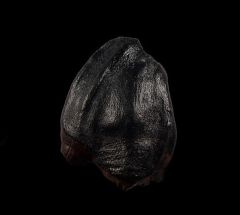
- Coelodonta antiquitatis (Woolly Rhino)$200.00
A TOP QUALITY, EXTRA LARGE Coelodonta antiquitatis tooth - the Woolly Rhinoceros. This Ice Age monster lived during the Pleistocene throughout Europe and northern Asia. This molar is complete and well preserved. Rhino material is scarer than Mammoth fossils. An excellent display piece from Siberia, Russia. Authenticity guaranteed.
X752 SIZE: 3-1/8" Height x 2" x 2-1/4"
Note - Posting 5 Woolly Rhinoceras teeth / jaws in October 2022. Link to Rhinocereas teeth.
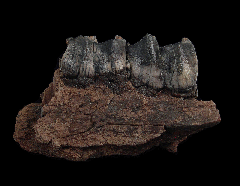
Learn More - Coelodonta antiquitatis (Woolly Rhino)$375.00
A High QUALITY, Coelodonta antiquitatis (Woolly Rhinoceros) jaw section with two teeth from Germany. This Ice Age monster lived during the Pleistocene throughout Europe and northern Asia. This has two complete mplars and is well preserved. Rhino material is scarer than Mammoth fossils. An excellent display piece from the Rhine River, Germany. Authenticity guaranteed.
X756 SIZE: 5" (3" Height)
Note - Posting 26 mammal and reptile fossils in March 2024. Link to Rhinocereas teeth.
Learn More - Thalassocnus, Swimming Sloth$0.00
An ultra rare, Thalassocnus, a Swimming Sloth, tooth. This sloth lived on the west coast of So. America during the late Miocene age. The rare tooth is from the Bahia Inglesia Formation, Copiapo, Chile. Fantastic red color. Excellent condition - no damage. No repair. I have not seen the swimming sloth teeth for sale before. This is all of the sloth material that I have from 10+ years ago! A very rare collector's tooth.
C932 BoP Size: 1-11/16"
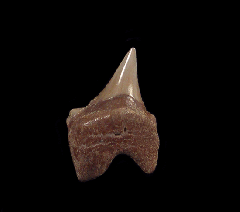
Learn More - Carcharocles auriculatus$0.00
An ultra rare, Auriculatus upper jaw, parasymphyseal tooth from Kazakhstan. The parasymphyseal is very rare since this tooth is not lost during feeding. There are not many of these teeth in the fossil record. The brown bourlette is incredible - 100% complete! The fine serrations are complete with a killer side cusp. These early Eocene teeth exhibit excellent color, gloss, and preservation. This specimen is for the serious, rare tooth collector! An ultra rare early Auric position tooth! Authenticity guaranteed.
K516 BoP SIZE: 3/4"
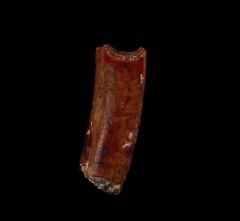
Learn More - Thalassocnus, Swimming Sloth$0.00
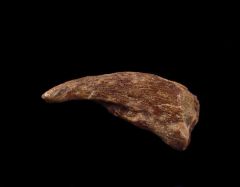
An ultra rare, Thalassocnus, a Swimming Sloth, claw. This sloth lived on the west coast of So. America during the late Miocene age. The rare claw is from the Bahia Inglesia Formation, Copiapo, Chile. Fantastic red color. Very good condition with minor damage (erosion). No repair. I have not seen a swimming sloth claw for sale before. This is all of the sloth material that I have from 10+ years ago! A rare collector's claw.
C931 BoP Size: 2-1/8"
Learn More - Mastodon$0.00
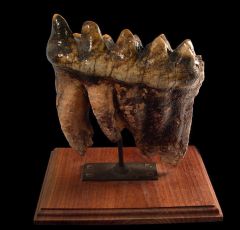
An EXTRA LARGE, Top Quality Miocene-Pliocene Mastodon molar from Florida. A May Fossil of the Month. An extinct elephant ancestor that inhabited North America during the late Miocene to late Pliocene. This molar is a big with 5 cusp rows and a small amount of cusp wear. Exceptional articulation. A big root - 100% complete. This is an exceptionally well fossilized Mastodon specimen. Note - Comes complete with the steel and hardwood base stand shown. Weighs 5 bs. No damage. No restoration or repair. An excellent, authentic Mastodon tooth. Authenticity guaranteed.
X609 BoP Size (specimen): 7" L x 3.5" W x 6.52" H ; Stand 9" x 6"
Name: Mastodon
Age: Miocene - Pliocene
Location: Northern Florida
Note - Posting two Mastodon teeth in May 2020 -> Link to Mastodon teeth
Learn More - Otodus pavlovi$0.00
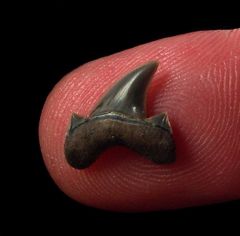
A very rare, early Otodus pavlovi upper jaw, lateral tooth from Aktulagay, western Kazakhstan. Otodus pavlovi was the smaller Otodus shark species present in this early Eocene deposit. The side cusps are large and complete. Exhibits no serrations. These teeth exhibit very good color, gloss, and preservation. No repair. Authenticity guaranteed. Perfect tooth.
K532 SIZE: 11/16"
Note - Adding 18 Kazakh Auriculatus or transition teeth in April 2020. --> Link to Kazakh Auriculatus teeth.
Learn More - Otodus pavlovi$0.00
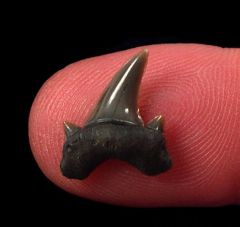
A very rare, early Otodus pavlovi upper jaw, lateral tooth from Aktulagay, western Kazakhstan. Otodus pavlovi was the smaller Otodus shark species present in this early Eocene deposit. The side cusps are large and complete. Exhibits no serrations. These teeth exhibit very good color, gloss, and preservation. No repair. Authenticity guaranteed. Perfect tooth.
K531 SIZE: 13/16"
Note - Adding 18 Kazakh Auriculatus or transition teeth in April 2020. --> Link to Kazakh Auriculatus teeth.
Learn More - Macrorhizodus nolfi$0.00
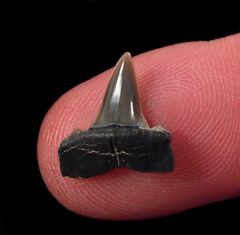
A very rare, early Macrorhizodus nolfi upper jaw, lateral tooth from Aktulagay, western Kazakhstan. Macrorhizodus nolfi is a Lamnidae shark and an early Mako shark (Isurus praecursor) relative in this early Eocene deposit. The side cusps are complete. No repair. Authenticity guaranteed. Perfect tooth.
K572 SIZE: 3/4"
Note - Adding 18 Kazakh Auriculatus or transition teeth in April 2020. --> Link to Kazakh Auriculatus teeth.
Learn More - Macrorhizodus nolfi$0.00
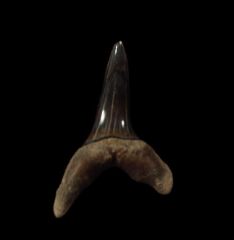
A very rare, early Macrorhizodus nolfi upper jaw, anterior tooth from Aktulagay, western Kazakhstan. Macrorhizodus nolfi is a Lamnidae shark and an early Mako shark (Isurus praecursor) relative in this early Eocene deposit. These teeth exhibit very good color, gloss, and preservation. A rare, early Eocene Macrorhizodus nolfi tooth. No repair. Authenticity guaranteed.
K571 SIZE: 1-3/8"
Note - Adding 18 Kazakh Auriculatus or transition teeth in April 2020. --> Link to Kazakh Auriculatus teeth.
Learn More - Otodus obliquus (not serrated)$95.00
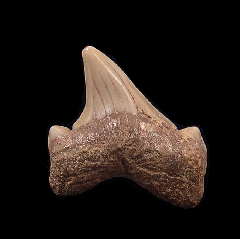
A very rare, early Otodus obliquus anterior tooth from Kzil-Orda Region, Kazakhstan. Otodus obliquus is the ancestor to O. auriculatus (see detailed discussion below) which leads to Megalodon. The bourlette is large and complete. Exhibits no serrations. The starting species to serrated Otodus teeth. These teeth exhibit very good color, gloss, and preservation. A rare, early Eocene (Ypresian) Auriculatus transition tooth. A very challenging tooth to find when building a Megalodon evolutionary set! No repair. Authenticity guaranteed. Note - This western Kazakhstan site is one of the few places in the world where the Otodus obliquus to Otodus auriculatus transition can be found in adjacent early Eocene formation units.
K561 SIZE: 1-1/16"
Note - Adding 24 Kazakh Auriculatus or transition teeth in July 2024. --> Link to Kazakh Auriculatus teeth.
Learn More - Otodus obliquus (not serrated)$135.00
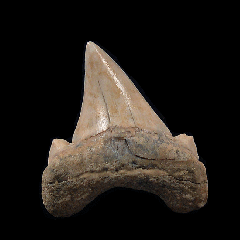
A very rare, early Otodus obliquus anterior tooth from Kzil-Orda Region, Kazakhstan. Otodus obliquus is the ancestor to O. auriculatus (see detailed discussion below) which leads to Megalodon. The bourlette is large and complete. Exhibits no serrations. The starting species to serrated Otodus teeth. These teeth exhibit very good color, gloss, and preservation. A rare, early Eocene (Ypresian) Auriculatus transition tooth. A very challenging tooth to find when building a Megalodon evolutionary set! No repair. Authenticity guaranteed. Note - This western Kazakhstan site is one of the few places in the world where the Otodus obliquus to Otodus auriculatus transition can be found in adjacent early Eocene formation units.
K562 SIZE: 1-1/4"
Note - Adding 24 Kazakh Auriculatus or transition teeth in July 2024. --> Link to Kazakh Auriculatus teeth.
Learn More