Search results for: 'dung site fossil crown e'
- Did you mean
- du01 site fossil crown e
- Related search terms
- site out enabl cohesive devices
- site out enabl cohesive derives
- dung seven enabl liops
- dung seven enabl liops/
- dung seven enabl liops//
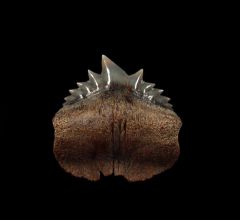
- Hexanchus griseus - Peru$0.00
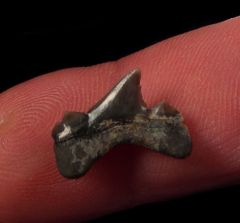
An Ultra Rare, Hexanchus griseus symphyseal tooth from the Sacaco area of Peru. A March Fossil of the Month. This is the nicest complete lower jaw symphyseal (center) tooth that I have seen. Superb preservation and color. Eleven very large and sharp primary cusps. Perfect cusps! An excellent essentially complete root. No repair or restoration. Authenticity guaranteed. Museum Quality rare collector's tooth. Unfortunately there are no more teeth coming from this site. This is an incredibly rare collector's tooth from an old collection.
P751 Size: 3/4" (wide)
Note - Adding 9 new Peruvian Hexanchus teeth in March 2022 -> Link to Hexanchus Teeth
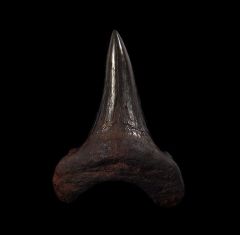
Learn More - Otodus obliquus (Auriculatus ancestor)$0.00
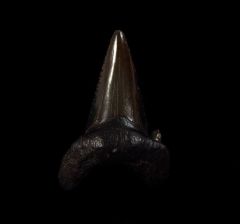
A very rare, Otodus obliquus tooth from the copper-red site of No. Carolina. The crown has no serrations. Typical Otodus side cusps. Complete root. Early Eocene - Ypresian age. A very rare collector's tooth. Very few Otodus teeth found at this site!
NC251 SIZE: 2-3/16"Note - Adding 9 early NC red site early Rics, transition teeth, and later Rics in June 2020. Link to NC Auriculatus teeth
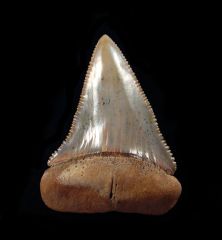
Learn More - Carcharodon carcharias$0.00
An incredibly sized GEM Great White shark tooth from Chile. This ULTRA RARE, MONSTER sized Great White tooth measures ~2-3/4" - a huge upper jaw PRINCIPAL ANTERIOR tooth. My finest remaining XL blue site tooth. The BEST of the BEST!
C1202 Size: 2-11/16" (2" W)
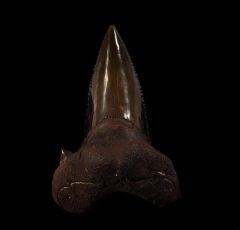
Learn More - Otodus auriculatus (Early Eocene form)$0.00
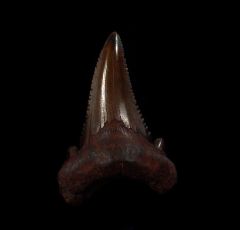
A very rare, Otodus auriculatus tooth from the copper-red site of No. Carolina. The crown has coarse serrations. The side cusps are typical of the Otodus obliquus. Complete root. Early Eocene - Ypresian age. A very rare collector's tooth. Very few Otodus auriculatus teeth (early form) found at this site!
NC253 SIZE: 2-1/2"Note - Adding 9 early NC red site early Rics, transition teeth, and later Rics in June 2020. Link to NC Auriculatus teeth
Learn More - Otodus auriculatus (Early Eocene form)$0.00
A very rare, Otodus auriculatus tooth from the copper-red site of No. Carolina. The crown has coarse serrations. The side cusps are typical of the Otodus obliquus. Complete root. Early Eocene - Ypresian age. A very rare collector's tooth. Very few Otodus auriculatus teeth (early form) found at this site!
NC254 SIZE: 2-1/16"Note - Adding 9 early NC red site early Rics, transition teeth, and later Rics in June 2020. Link to NC Auriculatus teeth
Learn More - Otodus auriculatus (Early Eocene form)$0.00
A very rare, Otodus auriculatus tooth from the copper-red site of No. Carolina. The crown has coarse serrations. The side cusps are typical of the Otodus obliquus. Complete root. Early Eocene - Ypresian age. A very rare collector's tooth. Very few Otodus auriculatus teeth (early form) found at this site!
NC255 SIZE: 1-11/16"Note - Adding 9 early NC red site early Rics, transition teeth, and later Rics in June 2020. Link to NC Auriculatus teeth
Learn More - Carcharodon carcharias$0.00
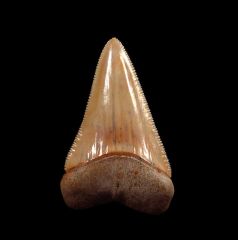
An EXTRA LARGE, GEM Great White shark tooth - upper jaw anterior tooth from Chile. A November 2018 Fossil of the Month. This tooth has a rich tan & gold colored crown, a large distinct brown gum line, and a brown root. Great color! Note - this tooth is from the last site dig site and the teeth from this site have extraordinary color and preservation. Highest quality enamel with no hydration cracks or peeling. Serrations are large with a strong tip serration. Excellent preservation - note nutrient hole on root. A PERFECT collector's tooth. No repair or restoration. Authenticity guaranteed. Best of the BEST!
C201 Size: 2-9/16"
Note - Adding 20 new Chilean Great White teeth in November 2018 Link to Great White shark teeth
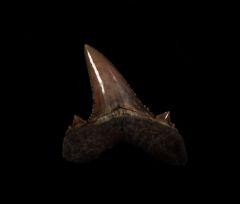
Learn More - Otodus mugodzharicus (Partial serrated)$0.00
A very rare, early Otodus mugodzharicus upper jaw, posterior tooth from Aktulagay, western Kazakhstan. A transitional tooth leading to C. auriculatus (see detailed discussion below) which leads to Megalodon. The bourlette is complete. Tooth exhibits very fine serrations along the inner curve of the crown only. These teeth exhibit very good color, gloss, and preservation. A rare, early Eocene Auriculatus transition tooth. A very challenging tooth to find when building a Megalodon evolutionary set! No repair. Authenticity guaranteed. Note - This western Kazakhstan site is one of the few places in the world where the Otodus to Auriculatus transition can be found in adjacent layers.
K555 SIZE: 5/8"
Note - Adding 18 Kazakh Auriculatus or transition teeth in April 2020. --> Link to Kazakh Auriculatus teeth.
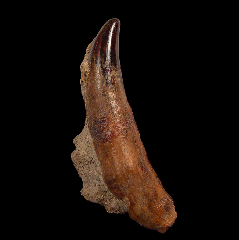
Learn More - Orcinus sp. - Killer Whale$695.00
An ultra rare Orcinus sp., a Killer whale, tooth from Caldera area of Chile. An incredible late Miocene Killer whale tooth from the Bahia Inglesa Fm. A MArch Fossil of the Momth. This tooth has incredible preservation and fantastic brown color. No repair or restoration. Authenticity guaranteed. Unfortunately there are no teeth coming from this site 19 years! This is the only Killer whale tooth that I have seen from this deposit. Orcinus sp., a Killer whale, evolved in the early Miocene, and is quite challenging to find in the fossil record. *** No discounts. ***
C713 SIZE: 3-3/8" (7/8" wide)
Note - Adding 16 Chilean Sperm whale fossils in March 2025. -> Link to Whale teeth.
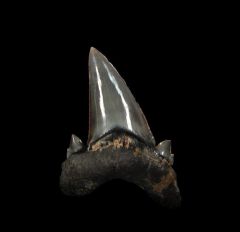
Learn More - Otodus mugodzharicus (Partial serrated)$0.00
A very rare, early Otodus mugodzharicus upper jaw, lateral tooth from Aktulagay, western Kazakhstan. A transitional tooth leading to C. auriculatus (see detailed discussion below) which leads to Megalodon. The bourlette is complete. Tooth exhibits very fine serrations along the lower 1/3 of crown and micro serrations to the tip. These teeth exhibit very good color, gloss, and preservation. A rare, early Eocene Auriculatus transition tooth. A very challenging tooth to find when building a Megalodon evolutionary set! No repair. Authenticity guaranteed. Note - This western Kazakhstan site is one of the few places in the world where the Otodus to Auriculatus transition can be found in adjacent layers.
K554 SIZE: 1-1/4"
Note - Adding 18 Kazakh Auriuclatus or transition teeth in April 2020. --> Link to Kazakh Auriculatus teeth.
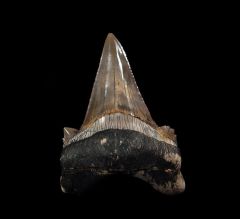
Learn More - Otodus mugodzharicus (Partial serrated)$0.00
A very rare, early Otodus mugodzharicus upper jaw, lateral tooth from Aktulagay, western Kazakhstan. A transitional tooth leading to C. auriculatus (see detailed discussion below) which leads to Megalodon. The bourlette is complete. Tooth exhibits wavy serrations along the lower 1/3 of crown and small wavy serrations to the tip. These teeth exhibit very good color, gloss, and preservation. A rare, early Eocene Auriculatus transition tooth. A very challenging tooth to find when building a Megalodon evolutionary set! No repair. Authenticity guaranteed. Note - This western Kazakhstan site is one of the few places in the world where the Otodus to Auriculatus transition can be found in adjacent layers.
K553 SIZE: 1-1/2"
Note - Adding 18 Kazakh Auriuclatus or transition teeth in April 2020. --> Link to Kazakh Auriculatus teeth.
Learn More - Otodus mugodzharicus (Partial serrated)$0.00
A very rare, early Otodus mugodzharicus upper jaw, anterior tooth from Aktulagay, western Kazakhstan. A transitional tooth leading to C. auriculatus (see detailed discussion below) which leads to Megalodon. The bourlette is complete. Tooth exhibits fine and wavy serrations along the lower 1/3 of crown and no serrations the tip. These teeth exhibit very good color, gloss, and preservation. A rare, early Eocene Auriculatus transition tooth. A very challenging tooth to find when building a Megalodon evolutionary set! No repair. Authenticity guaranteed. Note - This western Kazakhstan site is one of the few places in the world where the Otodus to Auriculatus transition can be found in adjacent layers.
K551 SIZE: 2-1/8"
Note - Adding 18 Kazakh Auriculatus or transition teeth in April 2020. --> Link to Kazakh Auriculatus teeth.
Learn More