Search results for: 'post recent do good cone no youtube'
- Related search terms
- goods terrestri a none
- good terrestri a none
- good terrestri a none/
- good terrestri a none//
- goods terrestri a none//
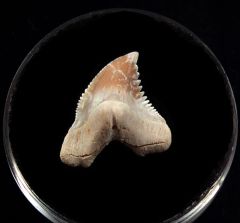
- Hemipristis serra : Mexico$20.00
A Quality Hemipristis serra shark tooth from Baja, Mexico. Highest quality enamel. A tan crown with a tan root. Excellent color! This is a Miocene tooth found in the Rosarita Beach Fm. A Baja collector's Hemipristis tooth. No repair or restoration. Authenticity guaranteed. An excellent tooth from a rare locality.
MX334 SIZE: 7/8"
Posting 19 species (68 rare shark teeth) from Baja, Mexico. Link to Mexican shark teeth -> Mexico shark teeth
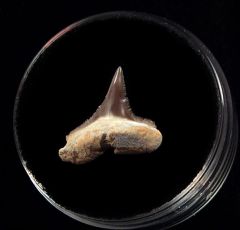
Learn More - Hemipristis serra : Mexico$35.00
A Top Quality Hemipristis serra shark tooth from Baja, Mexico. High quality enamel. A tan crown with a tan root. Excellent color! Great serrations. This is a Miocene tooth found in the Rosarita Beach Fm. A Baja collector's Hemipristis tooth. No repair or restoration. Authenticity guaranteed. An excellent tooth from a rare locality.
MX335 SIZE: 13/16"
Posting 19 species (68 rare shark teeth) from Baja, Mexico. Link to Mexican shark teeth -> Mexico shark teeth
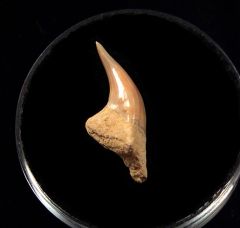
Learn More - Sphyrna mokarran : Mexico$0.00
A LARGE, TOP QUALITY Great Hammerhead shark tooth, Sphyrna mokarran, from Baja, Mexico. Excellent color and serrations (Note - the great Hammerhead has serrated teeth). A large lateral tooth from a Pliocene land deposit in the Gloria Fm. No repair or restoration. Authenticity guaranteed. A scarce collector's tooth from a rare locality.
MX241 SIZE: 9/16"
Posting 19 species (68 rare shark teeth) from Baja, Mexico. Link to Mexican shark teeth -> Mexico shark teeth
Learn More - Equus sp. - So. Carolina$30.00
A LARGE, well preserved horse tooth (Equus sp. ) from ACE Basin, So. Carolina. The horse arrived in North America during the late Pliocene and became extinct at the end of the Pleistocene. Very well fossilized lower jaw specimen. No repair or restoration. Authenticity guaranteed.
XH49 Size: 3-1/16"
Name: Equus sp.
Age: Pleistocene
Location: ACE Basin, So. Carolina
Note - Note - Posting 23 horse fossils in December 2024. Link to Horse Fossils
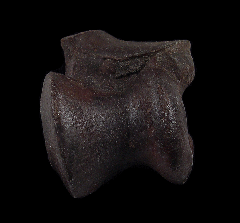
Learn More - Equus sp. Astragalus bone$25.00
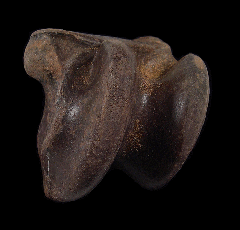
A LARGE, well preserved horse astragalus bone (Equus sp. ) from Northern Florida. The astragalus is the ankle bone. The horse arrived in North America during the late Pliocene and became extinct at the end of the Pleistocene. A well fossilized specimen. No repair or restoration. Authenticity guaranteed.
XH32 Size: 2-1/2"
Name: Equus sp.
Age: Pleistocene
Location: Northern Florida
Note - Posting 23 horse fossils in December 2024. Link to Horse Fossils
Learn More - Equus sp. Astragalus bone$25.00
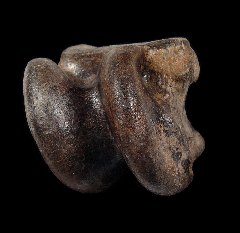
A LARGE, well preserved horse astragalus bone (Equus sp. ) from Northern Florida. The astragalus is the ankle bone. The horse arrived in North America during the late Pliocene and became extinct at the end of the Pleistocene. A well fossilized specimen. No repair or restoration. Authenticity guaranteed.
XH31 Size: 2-1/2"
Name: Equus sp.
Age: Pleistocene
Location: Northern Florida
Note - Posting 23 horse fossils in December 2024. Link to Horse Fossils
Learn More - Equus sp. Astragalus bone$32.50
A LARGE, well preserved horse astragalus bone (Equus sp. ) from Northern Florida. The astragalus is the ankle bone. The horse arrived in North America during the late Pliocene and became extinct at the end of the Pleistocene. A well fossilized specimen. No repair or restoration. Authenticity guaranteed.
XH30 Size: 2-5/8"
Name: Equus sp.
Age: Pleistocene
Location: Northern Florida
Note - Posting 23 horse fossils in December 2024. Link to Horse Fossils
Learn More - Equus sp. Caleaneus bone$25.00
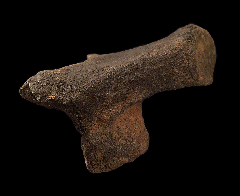
A LARGE, well preserved horse caleaneus bone (Equus sp. ) from Northern Florida. The caleaneus is the heel bone. The horse arrived in North America during the late Pliocene and became extinct at the end of the Pleistocene. A well fossilized specimen. No repair or restoration. Authenticity guaranteed.
XH29 Size: 3-3/4"
Name: Equus sp.
Age: Pleistocene
Location: Northern Florida
Note - Posting 23 horse fossils in December 2024. Link to Horse Fossils
Learn More - Equus sp. Caleaneus bone$35.00
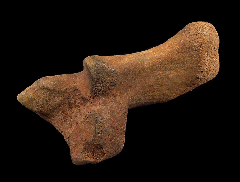
A LARGE, well preserved horse caleaneus bone (Equus sp. ) from Northern Florida. The caleaneus is the heel bone. The horse arrived in North America during the late Pliocene and became extinct at the end of the Pleistocene. A well fossilized specimen. No repair or restoration. Authenticity guaranteed.
XH28 Size: 4-3/4"
Name: Equus sp.
Age: Pleistocene
Location: Northern Florida
Note - Posting 23 horse fossils in December 2024. Link to Horse Fossils
Learn More - Equus sp. Toe bone$22.50
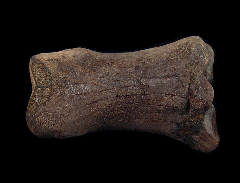
A well preserved horse toe bone (Equus sp. ) from Northern Florida. This is the first toe bone (phalanx). The horse arrived in North America during the late Pliocene and became extinct at the end of the Pleistocene. A well fossilized specimen. No repair or restoration. Authenticity guaranteed.
XH24 Size: 3-7/8"
Name: Equus sp.
Age: Pleistocene
Location: Northern Florida
Note - Posting 23 horse fossils in December 2024. Link to Horse Fossils
Learn More - Equus sp. Toe bone$32.50
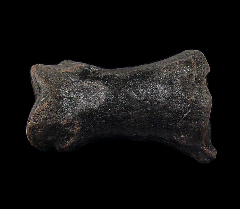
A well preserved horse toe bone (Equus sp. ) from Northern Florida. This is the first toe bone (phalanx). The horse arrived in North America during the late Pliocene and became extinct at the end of the Pleistocene. A well fossilized specimen. No repair or restoration. Authenticity guaranteed.
XH23 Size: 3-7/8"
Name: Equus sp.
Age: Pleistocene
Location: Northern Florida
Note - Posting 23 horse fossils in December 2024. Link to Horse Fossils
Learn More - Poebrotherium wilsoni - Extinct Camel$60.00
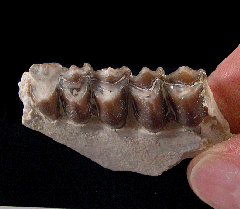
An extinct early camel jaw (Poebrotherium wilsoni) from Sioux Co., Nebraska. Poebrotherium was one of many mammals that thrived in the Early Oligocene in North America. Found in the Brule Fm. (Rupelian) 33 - 30 million years ago. A very well preserved specimen. No repair or restoration. Authenticity guaranteed.
WR07 Size: 2"
Name: Poebrotherium wilsoni
Age: Oligocene
Location: Sioux Co., Nebraska
Note - Posting 49 Oligocene Mammal fossils in January 2025. Link to Oligocene Mammal Fossils
Learn More