Search results for: 'sand tiger teeth shark teeth fossil eocene/'
- Related search terms
- shark enabled eagl intelligence four disaster response it stem
- shark enameloid enabl intelligence form disaster response it stem
- shark easel enabl intelligence form disaster response it stem
- shark enabl enamel intelligence form disaster response it star
- shark enabled enabl intelligence form disaster response it stand
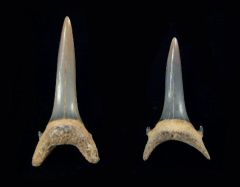
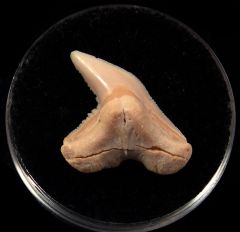
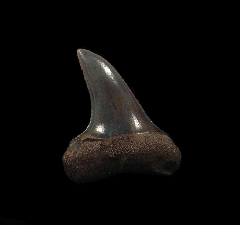
- Carcharias taurus$12.50
Incredibly colored C. taurus tooth with no desert polish - anterior jaw position.
P721 (Left) SIZE: 1-1/16"
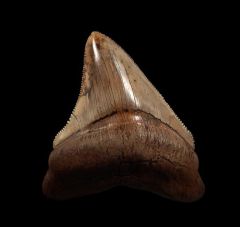
Learn More - Carcharocles megalodon$0.00
An Ultra Rare, Top Quality Sharktooth Hill Megalodon tooth from Pyramid Hill, Kern County, California. A location that produces very few Megalodon teeth and one of the toughest Megs to locate. A February Fossil of the Month. Highest quality enamel with a great brown and charcoal colors. The bourlette is a tan color and is nearly complete. The serrations are extra large & sharp and complete with a big tip serration. The root is nicely articulated and complete. Note the large grooves on the root ends - an early Miocene trait. This is a rare early Miocene (22 MYA) Meg from the Jewitt Sand Fm.- very unique! You never see these early Miocene Megs from Bakersfield, California. One of the rarest Megs! No repair or restoration. Authenticity guaranteed. A incredibly rare collector's piece that came out of a 25 year old old collection. My last Pyramid Hill / Jewitt Sand Fm. Meg tooth!
ST453 Size: 3-1/2"
Note - Adding two Sharktooth Hill area Meg teeth in February 2022. Link to Sharktooth Hill Meg Teeth.
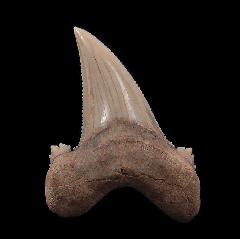
Learn More - Otodus auriculatus - Kazakhstan$450.00
A rare, early Auriculatus lateral tooth from Kzil-Orda region, Kazakhstan. The bourlette is complete. Excellent coarse serrations, large side cusps serrations, and with very irregular serrations. These teeth exhibit fantastic color, gloss, and preservation. A rare early Eocene Auriculatus tooth (Ypresian age - 55 MYA)! No repair or restoration. Authenticity guaranteed. This is the true early Eocene Auriculatus tooth! Note - This tooth appears to be a very late form of Otodus aksuaticus with serrations covering the botton 3/4 of the crown.
K505 SIZE: 2-1/16"
Note - Adding 24 Kazakh Auriuclatus or transition teeth in July 2024. --> Link to Kazakh Auriculatus teeth.
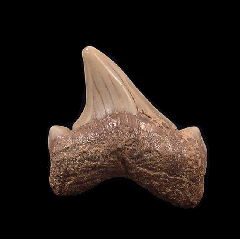
Learn More - Otodus obliquus (not serrated)$95.00
A very rare, early Otodus obliquus anterior tooth from Kzil-Orda Region, Kazakhstan. Otodus obliquus is the ancestor to O. auriculatus (see detailed discussion below) which leads to Megalodon. The bourlette is large and complete. Exhibits no serrations. The starting species to serrated Otodus teeth. These teeth exhibit very good color, gloss, and preservation. A rare, early Eocene (Ypresian) Auriculatus transition tooth. A very challenging tooth to find when building a Megalodon evolutionary set! No repair. Authenticity guaranteed. Note - This western Kazakhstan site is one of the few places in the world where the Otodus obliquus to Otodus auriculatus transition can be found in adjacent early Eocene formation units.
K561 SIZE: 1-1/16"
Note - Adding 24 Kazakh Auriculatus or transition teeth in July 2024. --> Link to Kazakh Auriculatus teeth.
Learn More - Otodus obliquus (not serrated)$135.00
A very rare, early Otodus obliquus anterior tooth from Kzil-Orda Region, Kazakhstan. Otodus obliquus is the ancestor to O. auriculatus (see detailed discussion below) which leads to Megalodon. The bourlette is large and complete. Exhibits no serrations. The starting species to serrated Otodus teeth. These teeth exhibit very good color, gloss, and preservation. A rare, early Eocene (Ypresian) Auriculatus transition tooth. A very challenging tooth to find when building a Megalodon evolutionary set! No repair. Authenticity guaranteed. Note - This western Kazakhstan site is one of the few places in the world where the Otodus obliquus to Otodus auriculatus transition can be found in adjacent early Eocene formation units.
K562 SIZE: 1-1/4"
Note - Adding 24 Kazakh Auriculatus or transition teeth in July 2024. --> Link to Kazakh Auriculatus teeth.
Learn More - Otodus obliquus (not serrated)$200.00
A very rare, early Otodus obliquus anterior tooth from Kzil-Orda Region, Kazakhstan. Otodus obliquus is the ancestor to O. auriculatus (see detailed discussion below) which leads to Megalodon. The bourlette is large and complete. Exhibits no serrations. The starting species to serrated Otodus teeth. These teeth exhibit very good color, gloss, and preservation. A rare, early Eocene (Ypresian) Auriculatus transition tooth. A very challenging tooth to find when building a Megalodon evolutionary set! No repair. Authenticity guaranteed. Note - This western Kazakhstan site is one of the few places in the world where the Otodus obliquus to Otodus auriculatus transition can be found in adjacent early Eocene formation units.
K561 SIZE: 1-1/4"
Note - Adding 24 Kazakh Auriculatus or transition teeth in July 2024. --> Link to Kazakh Auriculatus teeth.
Learn More - Physogaleus contortus : Mexico$25.00
A Top Quality Physogaleus contortus, a Ground shark, from Baja, Mexico. Highest quality enamel. Excellent tan color with a white root. The root shows incredible detail. Very good preservation and condition. This is a Miocene age tooth from the Rosarita Beach Fm. Authenticity guaranteed. A fantastic collector's tooth from a rare locality.
MX321 Size: 15/16"
Posting 19 species (68 rare shark teeth) from Baja, Mexico. Link to Mexican shark teeth -> Mexico shark teeth
Learn More - Physogaleus contortus : Mexico$20.00
A Quality Physogaleus contortus, a Ground shark, from Baja, Mexico. High quality enamel. Excellent tan color with a white root. The root shows incredible detail. Very good preservation and condition. This is a Miocene age tooth from the Rosarita Beach Fm. Authenticity guaranteed. A fantastic collector's tooth from a rare locality.
MX322 Size: 7/8"
Posting 19 species (68 rare shark teeth) from Baja, Mexico. Link to Mexican shark teeth -> Mexico shark teeth
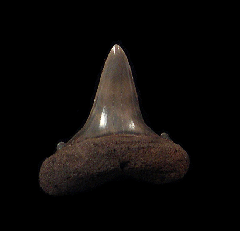
Learn More - Carcharomodus escheri$150.00
A rare Top Quality Carcharomodus escheri, a "serrated Mako" shark tooth - upper jaw anterior tooth from the "De Kuilen" sand pit, Mill, The Netherlands. The Carcharomodus escheri was named as a new genus in 2015 based upon a crenulated cutting edge ("wavy serrations"), slender & distally inclined crown, and side cusplets. This is a "Blue" layer tooth which are know for the highest preservation and best color - rarely seen outside of Europe. This tooth has excellent color and preservation. Sharp cutting edge. The age is late Miocene (approx. 6-8 million years ago). An excellent rare collector's tooth. Authenticity guaranteed. A difficult tooth to source.
N015 SIZE: 1-1/16"
Note - Adding 17 Netherlands Carcharomodus escheri teeth in July 2023. Link to Netherlands Escheri teeth
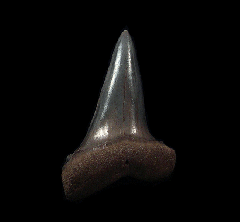
Learn More - Carcharomodus escheri$175.00
A rare Top Quality Carcharomodus escheri, a "serrated Mako" shark tooth - lower jaw anterior tooth from the "De Kuilen" sand pit, Mill, The Netherlands. The Carcharomodus escheri was named as a new genus in 2015 based upon a crenulated cutting edge ("wavy serrations"), slender & distally inclined crown, and side cusplets. This is a "Blue" layer tooth which are know for the highest preservation and best color - rarely seen outside of Europe. This tooth has excellent color and preservation. Sharp cutting edge. Two side cusplets. The age is late Miocene (approx. 6-8 million years ago). An excellent rare collector's tooth. Authenticity guaranteed. A difficult tooth to source.
N014 SIZE: 1"
Note - Adding 17 Netherlands Carcharomodus escheri teeth in July 2023. Link to Netherlands Escheri teeth
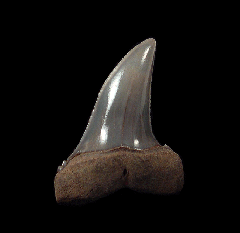
Learn More - Carcharomodus escheri$195.00
A rare Top Quality Carcharomodus escheri, a "serrated Mako" shark tooth - lower jaw anterior tooth from the "De Kuilen" sand pit, Mill, The Netherlands. The Carcharomodus escheri was named as a new genus in 2015 based upon a crenulated cutting edge ("wavy serrations"), slender & distally inclined crown, and side cusplets. This is a "Blue" layer tooth which are know for the highest preservation and best color - rarely seen outside of Europe. This tooth has excellent color and preservation. Sharp cutting edge. Two side cusplets. The age is late Miocene (approx. 6-8 million years ago). An excellent rare collector's tooth. Authenticity guaranteed. A difficult tooth to source.
N013 SIZE: 1-1/4"
Note - Adding 17 Netherlands Carcharomodus escheri teeth in July 2023. Link to Netherlands Escheri teeth
Learn More - Carcharomodus escheri$195.00
A rare Top Quality Carcharomodus escheri, a "serrated Mako" shark tooth - upper jaw anterior tooth from the "De Kuilen" sand pit, Mill, The Netherlands. The Carcharomodus escheri was named as a new genus in 2015 based upon a crenulated cutting edge ("wavy serrations"), slender & distally inclined crown, and side cusplets. This is a "Blue" layer tooth which are know for the highest preservation and best color - rarely seen outside of Europe. This tooth has excellent color and preservation. Sharp cutting edge. Two side cusplets. The age is late Miocene (approx. 6-8 million years ago). An excellent rare collector's tooth. Authenticity guaranteed. A difficult tooth to source.
N012 SIZE: 1-1/4"
Note - Adding 17 Netherlands Carcharomodus escheri teeth in July 2023. Link to Netherlands Escheri teeth
Learn More