Search results for: '35 in lion 1 inch with fish'
- Did you mean
- 35 in line 1 inch wide fish
- 35 in lion 1 inch wide fish
- Related search terms
- with good chain
- with good cani
- with good chanc
- with good cave
- with good club
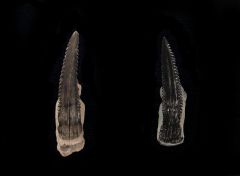
- Ray - BV$45.00
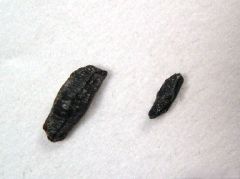
A pair of top quality, EXTRA LARGE ray dermal scutes (barbed type). These barbed ray dermal scutes are rare! F932 is a GEM specimen. F932 Close Up
F931 (Left) SIZE: 1-3/8"
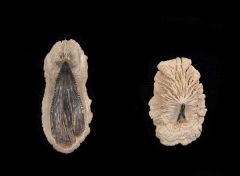
Learn More - Ray - BV$30.00
A pair of top quality, EXTRA LARGE ray dermal scutes (barbed type). These barbed ray dermal scutes are rare! F933 is an extra large, GEM barbed specimen.
F934 (Right) SIZE: 1-3/16"
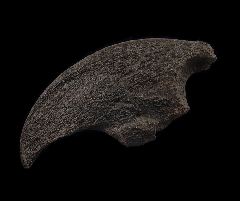
Learn More - Megalonyx jeffersonii - Ground Sloth$1,750.00
A rare LARGE, TOP QUALITY Megalonyx jeffersonii sloth claw from an extinct genus of giant ground sloths from Georgia. A February Fossil of the Month. This sloth claw has excellent preservation, and is 100% complete with no damage. Great black bone color and texture with a highly articulated natural bone surface. Excellent preservation of the proximal end. There is no restoration or repair. Authenticity guaranteed. A fantastic Pleistocene giant ground sloth claw specimen! Comes a custom burl wood stand as pictured.
X702 SIZE: 6-3/8” length x 2-7/8" x 1-3/8" Height with stand: 7-1/2"
Note – adding 2 Ground Sloth claws & teeth in February 2023. Link to Sloth fossils
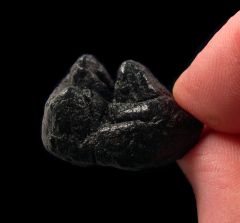
Learn More - Tapir$60.00
A TOP QUALITY Tapirus sp. tooth from the Pleistocene of Georgia. An extinct Tapir. This tooth has excellent preservation. It's complete with absolutely no restoration or repair. A wonderful Pleistocene specimen. Authenticity guaranteed.
X745 SIZE: 1-3/8” x 1"
Note – adding 6 tapir teeth in March 2022. Link to Tapir fossils
Learn More - Hetrodontus vincenti$10.00
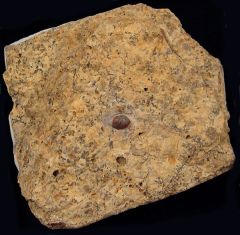
Excellent examples of Hetrodontus lateral teeth. Very difficult to find these teeth!
B148 (Right) SIZE: 1/4"
Learn More - Acrodus lateralis$35.00
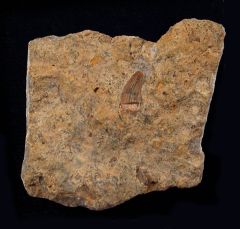
A rare Acrodus lateralis tooth. This tooth is from Muschelkalk limestone - middle Triassic age (240 million years old).
FR217 SIZE: 1/8"
Learn More - Nothosaurus mirabilis (Triassic)$25.00
A rare Nothosaurus mirabilis tooth. This tooth is from Muschelkalk limestone - middle Triassic age (240 million years old).
FR252 SIZE: 1/4"
Learn More - Saurichthys apicalis (Triassic)$10.00
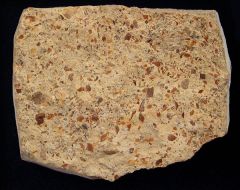
A rare Saurichthys apicalis tooth. This tooth is from Muschelkalk limestone - middle Triassic age (240 million years old).
FR294 SIZE: 1/8"
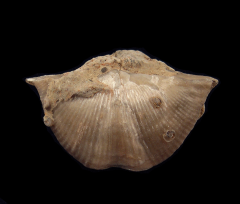
Learn More - Cyrtospirifer rudkinense$5.00
A silica replaced Cyrtospirifer brachiopod Rudkine near Voronezh, Russia. Brachiopods are bivalve molluscs. Both valves present - complete specimens and matrix free. Exceptional preservation. Note - 3/4" thick and heavy! This is a late Devonian (370 mya) brachiopod. A nice display piece!
Y012 SIZE: 1-5/8"
Note - Posting 23 new Brachiopods in January 2024. Link to Brachipods.
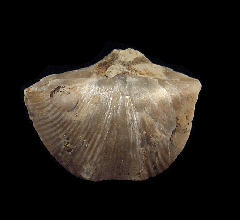
Learn More - Cyrtospirifer rudkinense$5.00
A silica replaced Cyrtospirifer brachiopod Rudkine near Voronezh, Russia. Brachiopods are bivalve molluscs. Both valves present - complete specimens and matrix free. Exceptional preservation. Note - 7/8" thick and heavy! This is a late Devonian (370 mya) brachiopod. A nice display piece!
Y010 SIZE: 1-7/16"
Note - Posting 23 new Brachiopods in January 2024. Link to Brachipods.
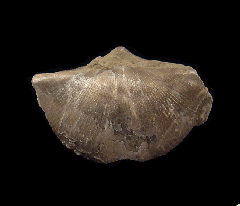
Learn More - Cyrtospirifer rudkinense$5.00
A silica replaced Cyrtospirifer brachiopod Rudkine near Voronezh, Russia. Brachiopods are bivalve molluscs. Both valves present - complete specimens and matrix free. Exceptional preservation. Note - 7/8" thick and heavy! This is a late Devonian (370 mya) brachiopod. A nice display piece!
Y009 SIZE: 1-9/16"
Note - Posting 23 new Brachiopods in January 2024. Link to Brachipods.
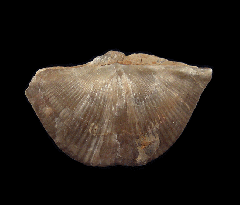
Learn More - Cyrtospirifer rudkinense$7.50
A silica replaced Cyrtospirifer brachiopod Rudkine near Voronezh, Russia. Brachiopods are bivalve molluscs. Both valves present - complete specimens and matrix free. Exceptional preservation. Note - 3/4" thick and heavy! This is a late Devonian (370 mya) brachiopod. A nice display piece!
Y008 SIZE: 1-5/8"
Note - Posting 23 new Brachiopods in January 2024. Link to Brachipods.
Learn More